What Actually Happens in Your First Therapy Session
People put off a booked session for weeks, not from doubt but from not knowing what the hour will look like. Here is the hour, start to finish, so there is one less unknown in the way.
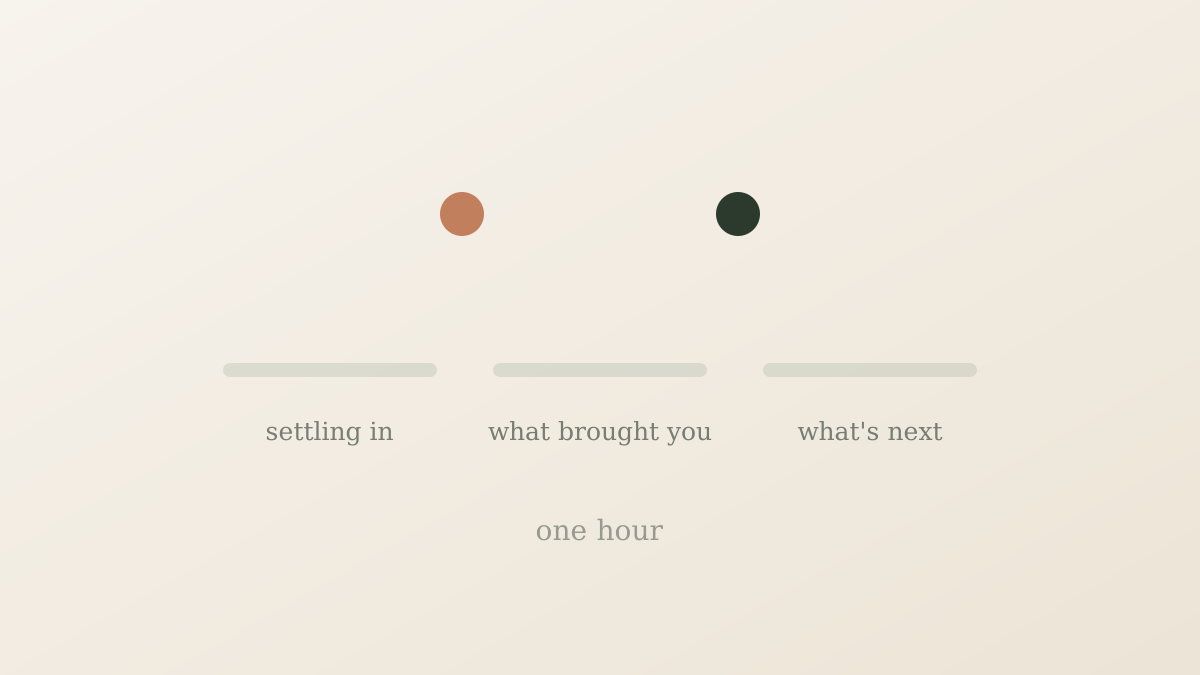
The intake form is filled out. The session is booked. And now there's a new, slightly different kind of anxiety sitting on top of whatever brought you here in the first place: what actually happens once you log on?
This is one of the most common reasons people put off a first session for weeks after they've already decided to go. Not doubt about whether they need it, just not knowing what the hour is actually going to look like, and the mind filling that gap with something more intimidating than it needs to be. Here's a realistic walkthrough, so there's one less unknown standing between you and booking.
Before the session
You'll usually have already filled out an intake form with some basic context: what's bringing you in, a bit about yourself, maybe a few logistics like preferred rate and timing. This isn't a test you can get wrong. It exists so the first session doesn't start from zero, and so your therapist has some sense of where to begin before you're both sitting there.
It's normal to feel nervous right before. Most people do, even people who've been to therapy before with a different therapist. That nervousness usually isn't a sign anything is wrong. It's just what it feels like to talk to someone new about things that matter.
The first ten or fifteen minutes
A first session almost never opens with "so, tell me your deepest trauma." It usually starts much more simply: a bit of orientation. What therapy with this particular person is going to be like, how confidentiality works and what its actual limits are, logistics like session length and frequency, and space for you to ask anything you're unsure about before getting into anything personal.
This part matters more than it might seem. It's where you get a sense of the person you're about to talk to, and where a lot of the initial nervousness tends to settle, simply because the unknown becomes a little more known.
The middle of the session
This is where you start actually talking about what brought you in, though "talking about it" looks different than most people expect. It's rarely a monologue you're expected to deliver perfectly. It's much more of a conversation, with your therapist asking questions, reflecting back what they're hearing, and gently steering when something's worth slowing down on.
You don't need to have it organised beforehand. You don't need the "right" words. You don't need to start at the beginning of your life story. Most people start wherever feels most pressing right now, and a good therapist will follow that thread and ask what's needed as it comes up, rather than expecting you to present a tidy summary.
It's also completely fine to not know exactly what you want to say, or to say "I don't really know how to explain this" out loud. That's a normal and honestly pretty common way for people to begin.
What it's not
It's not advice-giving in the way a friend might offer advice. A therapist isn't going to tell you what to do with your life in the first session, or really at any point, in that direct a way. The work is more about helping you understand your own patterns clearly enough that your own answers start to become visible, which takes longer than one session, but tends to hold up better than advice handed to you from outside.
It's also not a one-way interrogation. You're allowed to ask questions too: about the therapist's approach, about how they typically work, about anything from the intake process that wasn't clear. A first session is as much you evaluating fit as it is anything else.
Toward the end
Most first sessions close with some kind of loose plan: what you might focus on next, how often you'll meet, and space for any final questions before you log off. You're not committing to a fixed number of sessions or a rigid treatment plan at this point. It's more of a working starting point that can shift as you both learn more about what's actually useful.
How you might feel afterward
This varies a lot, and neither extreme means anything went wrong. Some people feel lighter, like something's been set down that they'd been carrying alone. Others feel a bit raw or tired, especially if it's the first time they've said some of it out loud. Some feel oddly neutral, like nothing dramatic happened, which is also completely normal for a first session. It usually takes a few sessions before you get a real feel for whether it's working, not because the first one doesn't matter, but because trust and rhythm build gradually.
If something about the first session feels off (not just uncomfortable in the ordinary way that talking about hard things is uncomfortable, but actually mismatched) it's okay to say so, or to try someone else. Fit matters in therapy more than people expect, and one session is rarely enough to know for certain, but it's also fine to trust a strong instinct either way.
If you're still deciding
Knowing what to expect doesn't remove all the nervousness, and it doesn't need to. Most people are at least a little nervous walking into a first session, including people who've done this many times before. That doesn't mean you're not ready. It usually just means it matters to you.
I work with young adults, and most of my clients are coming into therapy for the first time. Sessions draw from CBT, humanistic therapy, and trauma-informed care, shaped around whatever you bring rather than a fixed script, and the first session is exactly the low-pressure, get-to-know-each-other conversation described above.
If the hesitation sitting underneath this is less about the hour itself and more about whether any of it is worth bringing up, do I need therapy, or am I overreacting takes that on directly. And if you've been leaning on ChatGPT to think things through so far, here's where it helps and where it runs out.
Sessions run on a sliding scale (₹500–₹1000). You can read more or book a session here.
If you're in immediate distress or having thoughts of self-harm, please reach out for emergency support: iCall 9152987821, or Vandrevala Foundation 1860-2662-345 (24/7). This post is educational and isn't a substitute for individual care.